
Peptide Sciences USA
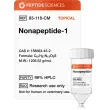
Nonapeptide-1 200 mg
- Concentration: 200 mg
- Pack Size: Topical
- Manufacturer: Peptide Sciences USA
- Brand Name: Nonapeptide
- Synonyms: Melanostatine-5, Tyr-Arg-Ser-Aar-Ala-Ala-Trp-Leu-Phe
- Molecular Formula: C63H90N16O13
- Molecular Weight: 1227.47 g/mol
- Peptide Sequence: Tyr-Arg-Ser-Aar-Ala-Ala-Trp-Leu-Phe
Nonapeptide-1 (also known as Melanostatine-5) is a synthetic peptide designed to interfere with melanin production in the skin. As a topical peptide formulation, it has been studied for its role in reducing hyperpigmentation, dark spots, and uneven skin tone, while promoting brighter, more even skin appearance. Manufactured by Peptide Sciences USA, this 200 mg solution is ideal for cosmetic and dermatological research focused on anti-aging and skin brightening effects.
Mechanism of Action
Nonapeptide-1 functions as a potent antagonist of the alpha-melanocyte-stimulating hormone (α-MSH) at the melanocortin 1 receptor (MC1R), a key regulatory site for melanin production. Melanin synthesis is typically initiated when α-MSH binds to MC1R, triggering a signaling cascade that leads to the activation of tyrosinase — the critical enzyme in melanin biosynthesis.
Nonapeptide-1 competitively inhibits this interaction, effectively blocking α-MSH from activating MC1R. This disruption downregulates the expression and activity of tyrosinase, thus reducing melanin production within melanocytes. Unlike chemical lighteners like hydroquinone, Nonapeptide-1 offers a peptide-based, biomimetic approach to pigmentation control, potentially offering improved skin tolerance and reduced risk of irritation or rebound hyperpigmentation.
Moreover, Nonapeptide-1 has shown the potential to selectively target hyperactive melanocytes while sparing normal skin pigmentation, making it a more precise and elegant solution in pigment modulation research. Its topical application also enhances usability in cosmetic or dermatological environments without systemic effects. Researchers are exploring its use not only for reducing age spots and melasma but also in broader anti-aging formulations aimed at restoring youthful skin tone and clarity.
Due to its high safety profile and specificity, Nonapeptide-1 is frequently evaluated in combination with other agents such as niacinamide or hyaluronic acid to further enhance brightening and hydration. It remains a focal point in regenerative dermatology and cosmeceutical science.
Key Features & Benefits
- Advanced Skin Brightening: Targets melanogenesis at the source by inhibiting α-MSH, offering research-backed pathways to even skin tone.
- Reduces Hyperpigmentation: Demonstrated effectiveness in minimizing the appearance of dark spots, melasma, and age-related discoloration.
- Peptide-Based Innovation: A safer alternative to traditional chemical agents like hydroquinone, with better skin compatibility and fewer side effects.
- Ideal for Topical Application: Formulated for direct use in topical research; highly adaptable in dermatological and cosmeceutical trials.
- Regenerative Medicine Backing: Used by professionals in anti-aging research and aesthetic science for its precision targeting of overactive melanocytes.
- Manufactured in the USA: Produced by Peptide Sciences under stringent quality protocols, ensuring high purity and consistency for research use.
- Broad Applicability: Can be evaluated as a standalone agent or combined with other peptides or active ingredients for synergistic skin-enhancing effects.
Product Specifications
| Product Name | Nonapeptide-1 |
|---|---|
| Form | Topical Solution |
| Concentration | 200 mg |
| Peptide Type | Synthetic Cosmetic Peptide |
| Purity | >98% |
| Molecular Weight | 1227.47 g/mol |
| Molecular Formula | C63H90N16O13 |
| Storage | Store at 2–8°C; protect from light. |
| Shelf Life | 24 months if stored correctly. |
| Brand | Peptide Sciences |
| Use | Research Use Only. Not for human consumption. |
Legal Disclaimer
Disclaimer: This product is intended for research purposes only and is not approved for human or veterinary use. It is the responsibility of the researcher to ensure compliance with all local laws and regulations. Peptide Sciences USA and its affiliates do not endorse the off-label or clinical use of any of its compounds outside of controlled settings. Always handle peptides using appropriate laboratory safety procedures.
Frequently Asked Questions
It is primarily studied for its ability to reduce melanin production and improve skin tone, often within anti-aging and pigmentation-focused research.
Yes, when used in controlled research settings, it has shown a high safety profile and is well tolerated by skin in lab studies.
Unlike hydroquinone, Nonapeptide-1 targets the melanin production process through peptide-based receptor inhibition rather than enzyme suppression, which may reduce the risk of irritation.
Yes. It is often researched in conjunction with hydrating or anti-inflammatory peptides to enhance cosmetic outcomes.
Yes, it is commonly studied in relation to pigmentation regulation, including tanning suppression and melanin modulation.
Related Products